Up to $2650 in Manufacturer Rebates and Discounts
0% Financing for 72 months-No payments until 2028
Frozen Pipe Repair in Austin, TX
Frozen Pipe Prevention & Repair in Austin, TX
Austin doesn’t freeze often, and that’s the problem. Most homes here were built for heat, not ice. Pipes run through attics, exterior walls, and shallow trenches, and many homes have never been through a hard freeze. Winter Storm Uri in 2021 showed how fast that can turn into burst pipes, flooded ceilings, and a weeks-long wait for a plumber.
At McCullough, we help Austin homeowners get ready before the cold arrives and respond fast when a freeze does damage. Here’s what our plumbers recommend.
Why Austin Homes Are at Risk
- Attic plumbing. Many Central Texas homes run water lines through the attic, one of the coldest spaces in the house during a freeze.
- Exterior walls. Kitchen and bathroom sinks on outside walls are usually the first fixtures to freeze.
- Older homes. Pier-and-beam homes in neighborhoods like Hyde Park, Travis Heights, and Clarksville often have exposed piping in the crawlspace.
- Shallow service lines. Water lines can be buried as little as about 12 inches deep, depending on the age of the home.
- Power outages. When a freeze knocks out power, your heat, your water heater, and any freeze protection can go with it.
How to Keep Your Pipes From Freezing
- Drip your faucets, hot and cold.
Open both the hot and cold sides about 1/8 of a turn for a slow, steady stream. Moving water is much harder to freeze. As we like to say, it’s easier to freeze a pond than a river. The more fixtures you open the better, especially sinks on exterior walls. Dripping won’t guarantee your pipes stay clear, but it gives you a much better chance than leaving them off. - Open cabinet doors.
Open kitchen and bathroom cabinets so warm air from the house can reach the pipes behind them. - Cover and insulate exposed pipes.
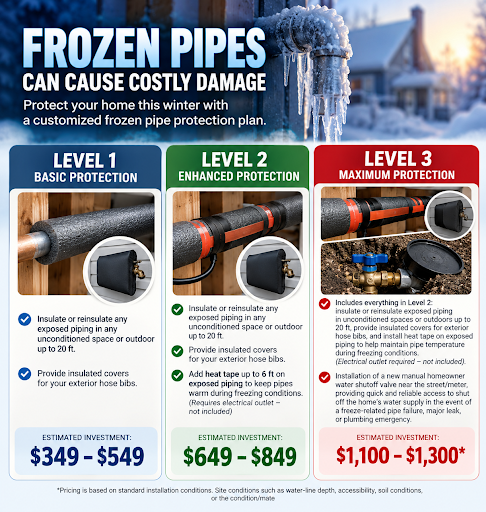
Wrap any exposed piping with foam pipe insulation. In a pinch, a pool noodle, towels, or blankets work well. For pipes in especially cold spots, ask us about heat tape. Gas lines don’t need insulation because there’s no water in them. - Cover your outdoor spigots (hose bibbs).
Disconnect garden hoses and put on a foam faucet cover. No cover? Wrap the spigot in a towel, cover it with a plastic bag, and secure a plastic cup over the top. Don’t let outdoor spigots drip. - Protect your irrigation backflow preventer.
The above-ground backflow device on your sprinkler system is one of the most common things we see break in an Austin freeze. Shut off the irrigation water, insulate the device, and cover it. - Find your main shutoff valve now, before you need it.
Your homeowner shutoff valve is usually in the ground near the front of your property by the city water meter, in a small round box with a metal or plastic lid or a rectangular box with a black or green lid. These valves often haven’t been touched in years, so be gentle, especially with round-handle valves, which tend to break. Don’t try to close the valve if the pipes are already frozen, since this can damage it. - Keep your tank water heater running.
Tank water heaters are heavily insulated and will keep heating as long as they have gas or power. If the tank starts leaking, close the valve on the cold-water side (usually on the right). If it’s electric, turn off the power to the unit. - Give your tankless water heater extra attention.
Keep it powered on. Many units have built-in freeze protection, but only while they have power. Drip the hot side a bit more, about 1/4 turn, because most tankless units need at least 0.5 gallons per minute to fire. Cover the piping underneath, but never cover the vent, which can cause a dangerous failure. If you lose power or are worried about damage, close the valves under the unit, turn off the power, and open the drain ports to empty the unit. Reverse these steps once temperatures return to normal.
Schedule Service
What to Do If Your Pipes Freeze
If you turn on a faucet and get little or no water during a freeze, your pipes may be frozen. Once pipes freeze, there’s not much anyone can do to restore flow until temperatures rise. Water lines in the ground thaw on the ground’s schedule, not the air’s.
- Leave the faucet open so water can flow as the ice melts.
- Use indirect heat only. A space heater near an exterior wall can help. Keep it uncovered and away from anything flammable.
- Never use a heat gun, torch, or open flame to thaw pipes. It can damage the pipe and start a fire.
- Watch for leaks as things thaw. A burst pipe often doesn’t leak until the ice melts.
View Our Monthly Offers
If a Pipe Bursts
- Shut off water at your main shutoff valve.
- If you can’t find or reach the valve and water is actively leaking, call the City of Austin or the fire department.
- Call McCullough to schedule a plumber.
- Turn off electricity to any area where water is near outlets or appliances.
Frozen & Burst Pipe Services in Austin, TX
- Emergency burst pipe repair
- Leak detection behind walls and under slabs
- Main shutoff valve repair and replacement
- Irrigation backflow preventer repair
- Tank and tankless water heater repair after a freeze
- Pipe insulation and heat tape installation
- Pre-freeze plumbing inspections
Don’t wait for the forecast. Schedule a pre-freeze inspection with McCullough and head into winter knowing your home is ready.