4.8 Google Rating

Back to Blog
Best HVAC Filters for Cedar Fever in Austin
In Austin, the arrival of winter does not bring a total reprieve from seasonal allergies. Instead, it signals the start of the most intense pollen event in Central Texas: Cedar Fever. From December through February, Ashe Juniper trees release massive amounts of pollen into the air, coating everything in a fine yellow dust and causing significant respiratory distress for thousands of residents. While you cannot control the air quality in the Texas Hill Country, you can transform your home into a sanctuary by choosing the right filtration for your HVAC system.
At McCullough Heating & Air Conditioning, we have spent decades helping Austin families breathe easier. We understand that your air conditioner is the primary defense mechanism for your indoor air quality. During a peak cedar event, a standard filter simply is not enough to keep those microscopic irritants at bay. In this guide, we will explore the science of MERV ratings, the best filter types for allergy sufferers, and how to maintain your system during the height of Cedar Fever.
Understanding MERV Ratings: The Defense Scale
When shopping for an air filter in Austin, the most important term to understand is MERV, which stands for Minimum Efficiency Reporting Value. This rating tells you how effectively a filter can capture particles of different sizes. For Cedar Fever, the size of the particle is the critical factor.
The Breakdown of MERV Levels
MERV ratings range from 1 to 20, but most residential systems operate within the 1 to 13 range.
- MERV 1 to 4: These are basic fiberglass filters. They are designed to protect the HVAC equipment from large dust bunnies and hair, but they do nothing to stop pollen or fine allergens.
- MERV 5 to 8: These pleated filters are a step up and can catch larger mold spores and some dust, but they still allow a significant percentage of fine cedar pollen to pass through.
- MERV 11 to 13: This is the “Sweet Spot” for Austin homeowners during Cedar Fever. These high-efficiency filters are capable of trapping microscopic particles, including pollen, pet dander, and even some bacteria.
Why Higher Is Not Always Better
It is tempting to buy a MERV 16 filter to achieve the cleanest air possible, but you must be careful. Higher MERV filters are denser, which means they require more force to push air through. If your HVAC system is not designed to handle a very high MERV rating, it can lead to restricted airflow, increased energy bills, and even a frozen evaporator coil. At McCullough Heating & Air Conditioning, we recommend checking your system’s specifications before jumping to an ultra high MERV rating.
The Best Filter Types for Austin Homes
Not all filters are created equal. Beyond the MERV rating, the physical construction of the filter determines how well it will perform when the cedar pollen is at its worst.
Electrostatic Pleated Filters
These are the most popular choice for allergy sufferers in Central Texas. They use self charging fibers that act like a magnet for airborne particles.
- Enhanced Capture: Because the fibers are statically charged, they can attract and hold tiny cedar pollen grains that might otherwise slip through a standard filter.
- Increased Surface Area: The pleated design provides significantly more surface area for air to pass through compared to a flat filter, which helps maintain airflow even as the filter begins to fill with dust.
High-Efficiency Media Filters
If you want the ultimate protection without the airflow restrictions of a standard 1 inch filter, a 4 inch or 5 inch media filter is the best option. These require a specialized cabinet installed near your air handler.
- Longer Lifespan: Because they are so thick, these filters can hold a massive amount of pollen and only need to be changed every six to twelve months.
- Deep Filtration: The depth of the media allows for superior particle capture with very low resistance to airflow, making it the most HVAC friendly way to combat Cedar Fever.
Maintenance Strategies During Peak Pollen Season
Even the best filter in the world will fail if it is not managed correctly during the height of the cedar run. In Austin, the sheer volume of pollen can clog a filter much faster than the manufacturer’s “90 day” estimate.
The 30 Day Rule
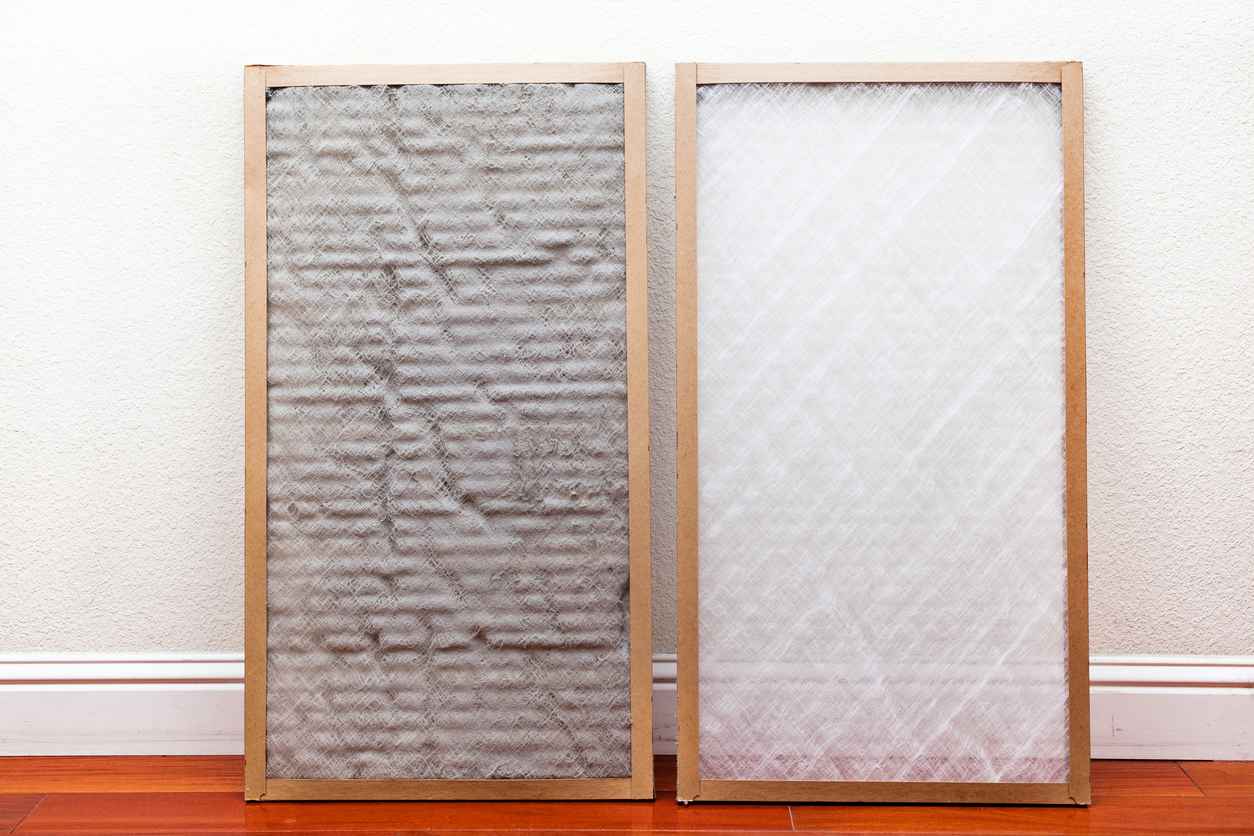
During December and January, we recommend Austin residents check their filters every 30 days. If the filter looks gray or you can see a visible layer of yellow dust, it needs to be replaced immediately. A clogged filter does more than just let allergens through; it forces your system to run longer cycles, which can lead to premature wear on your blower motor.
Keeping the System in “On” Mode
Normally, we suggest leaving your HVAC fan on “Auto” to save energy. However, during a high pollen alert, switching your thermostat fan setting to “On” can be beneficial.
- Constant Filtration: When the fan is on, the air in your home is constantly being pulled through the filter, even when the heater is not running.
- Air Scrubbing: This ensures that any pollen that enters through an open door or on your clothing is captured quickly rather than settling on your furniture or flooring.
Maximizing System Efficiency During Cedar Season
When Cedar Fever is at its peak, your HVAC system is under extra stress. Not only is it working to keep you warm during Central Texas cold fronts, but it is also battling a higher-than-normal “particulate load” due to the heavy pollen.
- Professional Duct Inspections: If your ductwork has leaks in the attic or crawlspace, it can “suck” unconditioned, pollen-heavy air directly into your home, bypassing your filter entirely. At McCullough, we can inspect your system to ensure that your ductwork is intact and that your system is moving air effectively.
- Outdoor Unit Clearance: While cedar pollen is an indoor concern, the yellow dust can also coat your outdoor condenser unit. A thick layer of pollen on the outdoor coils can reduce your system’s efficiency. A gentle rinse with a garden hose can keep the coils clean and your system running smoothly.
- Thermostat Calibration: Ensure your thermostat is communicating correctly with your system. Proper cycle lengths are essential for ensuring that air is moved through your high-efficiency filter enough times to actually lower the pollen count in your living spaces.
Prepare for Cedar Season with McCullough Heating & Air Conditioning
Is your HVAC system ready to handle the heavy pollen load this winter? The experts at McCullough Heating & Air Conditioning are ready to help you ensure your system is in top shape for the months ahead. From professional tune-ups that ensure proper airflow to expert advice on the best filter configurations for your specific unit, we provide the honest service Austin families have trusted for years.
Contact us today to schedule your system maintenance and find out how we can help you stay comfortable all winter long.
Recent News

Top HVAC Companies in Austin, TX: Looking Beyond Ads & Reviews

What Sun City Homeowners Should Know About HVAC Permit Data & Installations

Free Energy Audits for Westlake Homes: Cut Energy Bills, Boost Comfort & Upgrade Smarter

Is Your Austin Home Using Too Much Energy? Here’s How a Free Energy Audit Can Help You Save Big
Cold Snap Coming? What Austin Homeowners Should Do Now to Prevent Heat Loss and Heating System Failure

HVAC Maintenance Tips for West Lake Hills Homes with Larger Floor Plans and Multiple Zones